

Talent alone does not make one successful in sports. Behind all great sportsmen, an excellent mental model which drives discipline and concentration and strength is present. It is not all about physical prowess and ability, but the athlete mindset usually takes centre stage to distinguish the average players from the outstanding players. Mental toughness is even more essential in the case of any multisport athlete since this person has to change environments and learn and play in various sports settings.
Having true grit, the capacity to carry on when faced with difficulties and to remain motivated, is what all the sportspeople who desire to achieve success in the long term need to develop. Knowing how to enhance the attitude of the athletes will enable the younger players to release their full potential on the field and off the field.
This blog discusses the practical measures that an athlete, a coach, and a parent can employ to establish a strong mindset and gain resilience in the competitive sport.
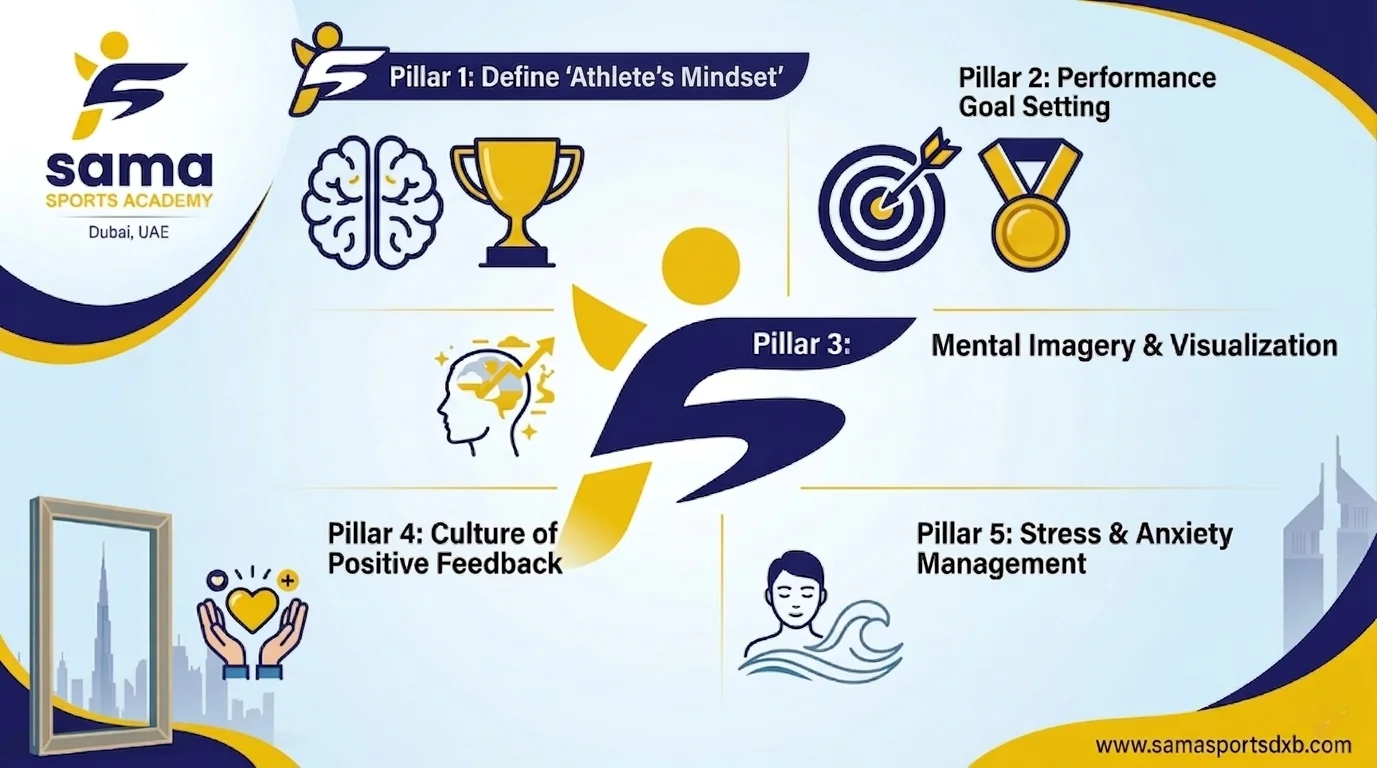
Understanding the Athlete Mindset
An athlete mindset is the psychological strength, attitudes, and mental habits that an athlete acquires to deal with the challenges and deliver at their highest. It consists of confidence, discipline, focus and emotional restraint.
Research provided by institutions such as the American Psychological Association points out that mental strength is a major determinant in performance, motivation and rebounding after a setback. Those athletes who train their minds in addition to their bodies have more chances of being more consistent and successful in the long run.
Mindset is even more crucial in the case of a multisport athlete. The activities of playing various sports demand flexibility, immediate adaptability, and effective mental power to cope with diverse training programmes and competition.
Why Mental Strength Matters in Sports
Most athletes spend a lot of hours enhancing their physical abilities without paying keen attention to mental training. Nonetheless, scientific research by organisations, such as the International Olympic Committee, highlights the importance of psychological preparation in athletic performance.
The following are some of the reasons why mental strength is important:
- Enhances concentration during competition
- Helps athletes overcome failure
- Enhances motivational levels and consistency
- Builds resilience during injuries or setbacks
- promotes lifetime sports
When athletes adopt good mental habits, they will be more ready to handle situations that have high pressure, and their performance will be at its best.
The Unique Advantage of a Multisport Athlete
Multisport athletes have great mental and physical benefits. Competing in more than one sport subjects the athletes to various challenges, skill sets and coaching.
Some benefits include:
1. Improved Adaptability
Alternating between sports teaches sportsmen how to change strategies in a short time. Such flexibility enhances the ability to think and to solve problems in competition.
2. Reduced Burnout
Early specialisation among athletes has the effect of mentally exhausting them. The involvement in the multisport makes the training interesting and avoids burnout.
3. Better Overall Athletic Development
Based on the statistics given by the National Collegiate Athletic Association, most professional athletes were involved in several types of sports in their childhood that contributed to their development of balanced physical and psychological skills.
Key Strategies to Improve Athlete Mindset
The mental toughness is something that needs to be trained. The following are some of the measures that can be considered by athletes.
1. Set Clear and Achievable Goals
One of the best methods of enhancing an athlete’s mentality is goal setting. Goals give the idea of direction and motivation in training.
There are three kinds of goals that the athletes ought to develop:
- Short-term goals – Weekly or monthly performance objectives
- Mid-term goals – Seasonal gains
- Long-term goals – Career or personal development milestones
Monitoring progression makes the athletes concentrate and have motivation.
2. Develop a Growth Mindset
Growth mindset is an idea that skills can be developed through practice and education. Such athletes who have this thinking view challenges as opportunities rather than obstacles.
Growth mindset is one of the concepts that sports psychologist Carol Dweck popularised, saying that those who challenge themselves have higher chances of achievement.
For athletes, this means:
- Learning from mistakes
- Accepting constructive feedback
- Continuously improving skills
3. Practise Visualisation Techniques
Visualisation is the potent mental workout of the world’s top sportsmen.
Through visualisation, athletes are able to rehearse skills for performing well in a domestic or international competition. This increases confidence and diminishes anxiety.
Visualisation methods have been known to make many Olympic champions do what they do even when they are under intense pressure, such as Michael Phelps, who is regarded as one of the greatest legends in the sport.
Visualisation assists the athletes:
- Improve confidence
- Prepare mentally for competition
- Reduce performance anxiety
4. Build Mental Resilience Through Challenges
Resilience refers to the capacity to recover when we encounter the disappointments of being injured, or losing a match or game, or facing declining performances.
Athletes ought to take challenges as learning experiences as opposed to failures. The coaches and parents help in supporting this mindset.
To become more resilient, strategies are:
- Reflecting on mistakes constructively
- Staying patient with improvement
- Maintaining a positive internal dialogue
The achievement of mental resilience is a fundamental attribute of successful athletes.
5. Maintain Consistent Training Habits
One of the greatest predictors of success in sports is consistency. Athletes with orderly routines acquire some discipline and mind concentration.
Exercises that should be involved in training include:
- Physical conditioning
- Skill development
- Mental preparation
- Recovery and rest
Some of the programmes, like the Sama Sports Academy training programmes, are the ones that enable athletes to build structured training routines and build physical and mental performance.
6. Learn to Manage Pressure
Sports competition is usually accompanied by high pressure. It is important to learn how to deal with stress in order to enhance an athlete’s mindset.
Some of the techniques that can assist are:
- Controlled breathing
- Pre-game routines
- Positive self-talk
- Focusing on effort instead of outcome
Athletes who learn these techniques perform more consistently during competitions.
7. Surround Yourself With Positive Influences
The environment is important in determining the mindset of an athlete. Coaches, team members, and family members can support athletes to achieve better results.
Good sports communities promote:
- Healthy competition
- Team collaboration
- Personal development
The athletes may also utilise such resources as youth sports development insights to understand how to develop better sports habits and enhance their performance.
The Role of Coaches and Parents
It is not only the duty of the athlete to improve his mindset. Mental development is also largely influenced by coaches and parents.
They can help by:
- Promoting hard work rather than just results
- Supporting athletes after losses
- Promoting healthy training routines
- Creating a positive sports environment
Young athletes are more likely to develop confidence and resilience once they feel supported.
Balancing Mental and Physical Training
Athletes pay a lot of attention to physical abilities but do not practise much on mental preparation. But most successful performers train in equal amounts.
Mental training techniques could involve:
- Meditation and mindfulness
- Journaling performance reflections
- Sports psychology sessions
- Confidence-building exercises
By integrating physical exercise with psychological conditioning, one comes up with all-round athletes capable of coping with competitiveness.
Long-Term Benefits of a Strong Athlete Mindset
The gains of building mental strength are much farther than sports.
Resilience and discipline among athletes can help them to attain some of the most desirable life skills, like:
- Leadership
- Time management
- Emotional intelligence
- Problem-solving abilities
In the case of a multisport athlete, these skills will result in higher performance, enhanced teamwork, and personal development in the long term.
Conclusion
It does not take one day to make good grits. It takes time, perseverance and hard work to build a strong athlete psyche. Through goal setting, challenge embracing, visualisation and disciplined training regimes, athletes are able to realise their full potential.
Mental toughness is an added strength to any multisport athlete. Flexibility, learning and overcoming challenges in various sports make better and more confident competitors.
Learning to adjust athlete mentality is one of the best investments that the athletes can make in the pursuit of success. Through proper mindset, will and encouragement system, anyone can be great in sports and in life.
FAQs
1. What is an athlete mindset?
The athlete mindset is described as mental attitudes and psychological routines which enable athletes to remain focused, tough and motivated throughout the training and competition period.
2. Why is mindset important for a multisport athlete?
A multisport athlete is exposed to various physical and psychological challenges in sport. A powerful attitude can assist them to adapt fast, be motivated and do so constantly.
3. How can young athletes improve their mindset?
To enhance their attitude, young athletes can set goals, visualise, engage in regular training sessions, and learn not to repeat their mistakes.
4. Can mental training improve sports performance?
Yes. Visualisation, mindfulness and positive self-talk are mental training strategies that can be used to a great extent to enhance focus, confidence and performance.
5. How do coaches help build an athlete mindset?
Coaches foster self-discipline, endurance, and healthy practices and offer direction and positive feedback that allow the athletes to develop both mentally and physically.
6. What are the benefits of being a multisport athlete?
Multisport athletes gain superior coordination, flexibility, and psychological stamina and lower the chances of burnout and overuse trauma.