
Dubai has no shortage of sports academies, which is exactly the problem for parents trying to choose one. Every academy website says it offers the best coaching, the best facilities, and the best experience for kids.
The honest answer is that the best sports academy for your child in Dubai depends on their age, personality,and what you actually want them to get out of the sport, not on which academy has the biggest marketing budget. This guide breaks down what to actually evaluate, in the order it actually matters, so you can shortlist with confidence instead of guessing from a homepage.

What Makes a Sports Academy “Best” for Your Child
There is no single best sports academy in Dubai for every family. A highly competitive academy with an intense training schedule might be exactly right for a driven ten year old and completely wrong for a shy five year old trying a sport for the first time. Before comparing specific academies, get clear on what you want: general fitness and fun, a genuine skill pathway, or a route toward competitive play. That answer should shape your shortlist more than any review or ranking.
It also helps to separate what you want from what your child wants, since these are not always the same thing in the first term or two. A child who is pushed toward competition before they are ready often loses interest in the sport entirely, while a child who is genuinely ready for more structure can get bored in a program that stays too casual for too long. The best academies are honest about which category your child currently fits, even if that means recommending a program that generates less revenue for them.
Comparing Multi-Sport vs Single-Sport Academies
Multi-sport academies let a child try football, basketball, swimming, and other activities across a term, which is ideal for younger children still figuring out what they enjoy. Single-sport academies offer deeper, more structured coaching in one discipline and suit children who have already found a sport they are committed to.Neither format is inherently better. A family unsure which their child will prefer should lean toward a multi-sport academy for at least the first term rather than committing early to one sport.
There is also a middle path worth knowing about: some academies run a multi-sport foundation term followed by a specialization track, so a child can sample several sports for eight to twelve weeks before choosing one to pursue more seriously. This structure tends to produce the most confident long-term commitment, since the choice comes from the child’s own experience rather than a parent’s guess about what they might enjoy.
Coaching Quality: The Single Biggest Differentiator
Facilities matter, but coaching quality is what actually determines whether a child improves and stays engaged. Ask about coach to child ratios for your child’s age group, whether coaches hold recognized certifications, and how the academy handles children who are nervous or behind their peers. A strong academy will have a clear, specific answer to all three questions. A weak one will give you a general reassurance instead of specifics.
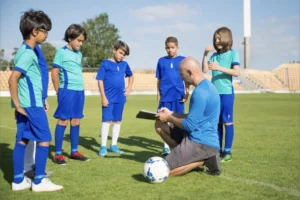
It is worth watching part of a live session before enrolling. Coaches who give every child attention, correct technique without embarrassing anyone, and keep energy high through a session are the clearest sign of a well-run sports academy dubai families tend to stick with long term.
Pay attention specifically to how a coach responds when a child makes a mistake or loses focus mid session. A coach who redirects calmly and keeps the group moving is managing the room well. A coach who singles a child out, raises their voice, or lets a small group dominate the session while others stand around is a signal worth taking seriously, regardless of how polished the academy’s marketing looks.
Age-Appropriate Programming for Every Stage
The best academies structure programs by clear age bands rather than mixing very different skill levels together. Kids sports classes dubai searches spike heavily among parents of four to seven year olds specifically because this age group needs a gentler, coordination-focused introduction rather than formal competition. Programs for eight to eleven year olds should introduce more structured skills and team play, while pre-teens and teenagers benefit from academies offering a genuine competitive pathway if they want one.
Ask specifically how a program changes as a child moves up an age band, rather than assuming it automatically does. Some academies simply relabel the same session plan for a different age group, which shows up quickly as boredom in older children or frustration in younger ones who are not yet ready for the pace.
Location and Consistency: Why Nearby Beats “Best”
An academy with an excellent reputation across town will deliver worse results for your child than a solid academy ten minutes from home, simply because consistency drives improvement in any sport. Missed sessions from a long commute add up quickly, especially for younger children. Check whether an academy has a branch near your home or school before falling in love with a location further away, and factor traffic patterns into your decision, not just distance.
This matters even more for families juggling multiple children’s activities or shift-based work schedules. A slightly less prestigious academy that your family can realistically attend every week, without exception, will produce a more confident and consistent young athlete than a highly rated one you can only make it to half the time.
How Long It Takes to See Real Progress
Parents often ask how quickly they should expect to see improvement, and the honest answer depends heavily on age and starting point. Younger children in a fundamentals program typically show visible gains in coordination and confidence within four to six weeks, simply from consistent exposure. Older children working on specific technical skills usually need a full term, generally eight to twelve weeks, before a coach can meaningfully assess and report on progress.
Be cautious of any academy promising rapid, dramatic results in a very short window, particularly for younger children. Genuine skill development in sport is gradual, and an academy that overpromises on speed is often more focused on retention marketing than on realistic, age-appropriate coaching.
A more useful signal than speed is whether a coach can describe specifically what your child has improved on, rather than offering a generic “doing great” update. Academies that run even an informal check-in at the end of each term, even a short verbal summary rather than a formal report, tend to be more deliberate about coaching in general, which usually shows up in results over time as well.
How to Shortlist and Compare Academies
Start with three to four academies within a reasonable distance from home, then compare them on the same criteria: coaching qualifications, group size, age-appropriate structure, and transparent pricing. Avoid comparing purely on marketing claims like “best” or “award winning” without asking what those claims are actually based on. A short trial session at each shortlisted academy is the single most useful comparison tool available, since it shows you the real coaching style rather than a polished sales pitch.
It also helps to talk to other parents already enrolled, either through the academy directly or through community groups for your area. Parents who have been attending for a term or more can tell you things a trial session cannot, such as how communicative the coaches are about progress, how sessions handle a public holiday or cancellation, and whether the academy’s marketing matches the day-to-day reality.
Questions to Ask on a Trial Visit
● What is the coach to child ratio for my child’s specific age group?
● What happens if my child is nervous or reluctant to join in?
● How is progress tracked and communicated to parents?
● Is there a clear pathway if my child wants to get more competitive later?
● What is included in the monthly fee, and what costs extra?
● How are sessions adjusted during extreme heat?
Key Takeaway: There is no single best sports academy in Dubai for every child. The right choice combinesqualified, attentive coaching, an age-appropriate structure, a location you can commit to consistently, andtransparent pricing. Visit a trial session, ask the specific questions in this guide, and judge what you see overwhat any website claims.