
Karate has remained one of the most consistently popular extracurricular activities for children in Dubai, and for good reason. Unlike team sports that depend heavily on a whole squad showing up, karate offers a structured, individual pathway that a child can progress through at their own pace while still training alongside peers. For parents new to the sport, though, the sheer number of martial arts programs across the city, each with its own belt system, teaching style, and pricing, can make choosing the right karate class for a child feel more complicated than it needs to be. This guide covers exactly what to look for before enrolling.
Why Parents in Dubai Are Choosing Karate for Their Kids
Karate offers something that many other youth sports in Dubai do not: a genuinely individual progression system that still happens in a group setting. A child moves through belt levels based on their own demonstrated skill rather than a team’s overall performance, which tends to suit children who prefer working toward a personal goal rather than competing directly against or relying on teammates.
The sport’s structure around discipline, respect, and self-control also appeals strongly to parents looking for more than pure physical activity. A well-run karate class channels a child’s energy into a clear framework of rules and etiquette, which many parents report carries over noticeably into behavior at school and at home, though this benefit depends heavily on the quality and consistency of instruction, not the sport itself.
What to Look for in a Karate Program in Dubai
Not every karate class in Dubai is run the same way, and the differences matter more than they might first appear. Some programs focus heavily on traditional forms and etiquette, while others lean toward a more sport-oriented approach built around competition and sparring. Neither style is inherently better, but they suit different children, so it is worth understanding which approach a program actually follows before enrolling, rather than assuming all karate classes teach the same thing.
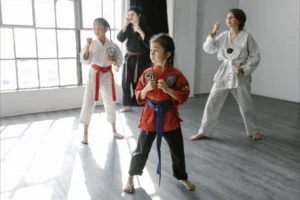
It is worth observing part of a live class before committing. Watch how the instructor manages a full class of children at different belt levels simultaneously, since this is common in karate more than in most other youth sports. A strong instructor keeps advanced students appropriately challenged while still giving beginners clear, patient correction, rather than letting either group be neglected.
Belt Systems and Age-Appropriate Progression
Most karate programs in Dubai follow a structured belt system, typically starting with white belt for complete beginners and progressing through a sequence of colored belts toward black belt over several years of consistent training. Ask specifically how often belt gradings happen and what the criteria for advancement actually are, since academies vary considerably here. Some hold gradings every eight to twelve weeks based on demonstrated skill, while others use a more informal or infrequent process.
Younger children, typically around four to six, usually start in a foundational class focused on coordination, listening skills, and basic movements rather than formal sparring. From around seven, more structured technique and the first proper belt progression usually begins, and by nine or ten, children who show interest can move into more competitive training, including regional tournaments for those who want that pathway. Kids sports classes dubai searches spike heavily around the younger end of this range, reflecting how many parents specifically want a gentle, well-supervised introduction rather than an intensive program from day one.
Instructor Qualifications and Class Safety
Instructor credentials deserve close attention in karate, arguably more than in some other youth sports, given the physical contact involved even in a well-run beginner class. Ask what martial arts federation or governing body certifies the instructor, how many years of teaching experience they have specifically with children rather than adults, and whether they hold current child safeguarding and first aid training.
Class safety also depends heavily on supervision ratios and how sparring, when introduced, is managed. Confirm that any sparring for children uses appropriate protective equipment and is closely supervised, and ask directly at what age or belt level sparring typically begins at that specific academy, since this varies significantly between programs.
The Discipline and Confidence Benefits Beyond the Mat
Many parents enroll their child in karate specifically for the discipline and confidence benefits rather than the physical exercise alone, and a well-run program genuinely can deliver both. The structured etiquette around bowing, addressing instructors respectfully, and following class rules gives children a clear framework that some find easier to internalize than the looser social rules of team sports.
Confidence tends to build gradually and visibly through the belt system itself, since each grading gives a child a concrete, achievable marker of progress. A child who struggles with confidence in other areas of life sometimes responds particularly well to this structure, since improvement is measured against their own past performance rather than compared directly to peers.
Facilities and Class Structure
Facility quality for karate matters less than for a sport requiring a large playing surface, but a few details are still worth checking. Confirm the training space has proper matting, adequate space per child to avoid collisions during drills, and reasonable class sizes for the age group and belt level being taught. A class that crams twenty children of mixed ability onto a small mat will struggle to deliver individual correction regardless of how skilled the instructor is.
Ask about typical class length and frequency as well. Most children’s karate classes in Dubai run for around forty-five minutes to an hour, once or twice weekly for beginners, with more frequent training available for children pursuing competitive karate seriously.
Karate Versus Other Martial Arts for Kids
Parents sometimes weigh karate against other martial arts available in Dubai, such as taekwondo, judo, or mixed martial arts programs for children. Karate tends to suit children who respond well to structured forms and a clear belt progression, while taekwondo places more emphasis on kicking techniques and often faster paced sparring. Judo focuses heavily on grappling and throws rather than striking, which appeals to a different type of child entirely.
There is no universally better choice among these options. The right martial art depends on your child’s temperament, physical style, and what genuinely holds their interest during a trial class. Many academies in Dubai offer trial sessions across more than one discipline, and taking advantage of this before committing to a full term is worth the extra time it takes.
Balancing Karate With School and Other Activities
One consideration parents in Dubai often underestimate is how karate fits alongside school commitments and other extracurricular activities. Younger children generally do well with one or two structured sessions a week, leaving plenty of room for schoolwork, free play, and other interests. Pushing a young child into daily training rarely speeds up genuine progress and more often leads to fatigue or a loss of enthusiasm for classes that should feel enjoyable.
As children get older and show real commitment to karate, gradually increasing session frequency in line with the academy’s grading pathway tends to produce steadier, more sustainable progress than an aggressive early schedule. A good instructor will discuss this pacing with you directly rather than simply encouraging more sessions regardless of whether your child has the time or energy for them.
Questions to Ask Before Enrolling
- What belt system does the academy follow, and how often are gradings held?
- What certifications and child-specific teaching experience does the instructor have?
- At what age or belt level does sparring begin, and what protective equipment is used?
- What is the class size and student-to-instructor ratio for my child’s age group?
- Is a trial class available before committing to a full term?
- What costs are separate from the monthly fee, such as grading fees or uniform?
Key Takeaway: Karate classes for kids in Dubai offer real value beyond physical activity, but only when the program is run by a qualified, patient instructor with a clear, age-appropriate structure. Prioritize instructor credentials, class safety, and a genuine belt progression system over a slick studio or a low headline price. Visit a trial class, ask the questions above, and choose the program that channels your child’s energy into confidence and discipline rather than just supervised exercise.